
Case Studies
Dating Link Building Case Study: 5.8× Organic Traffic From 33 Managed Placements
By Velichko AchevPublished 3 min read
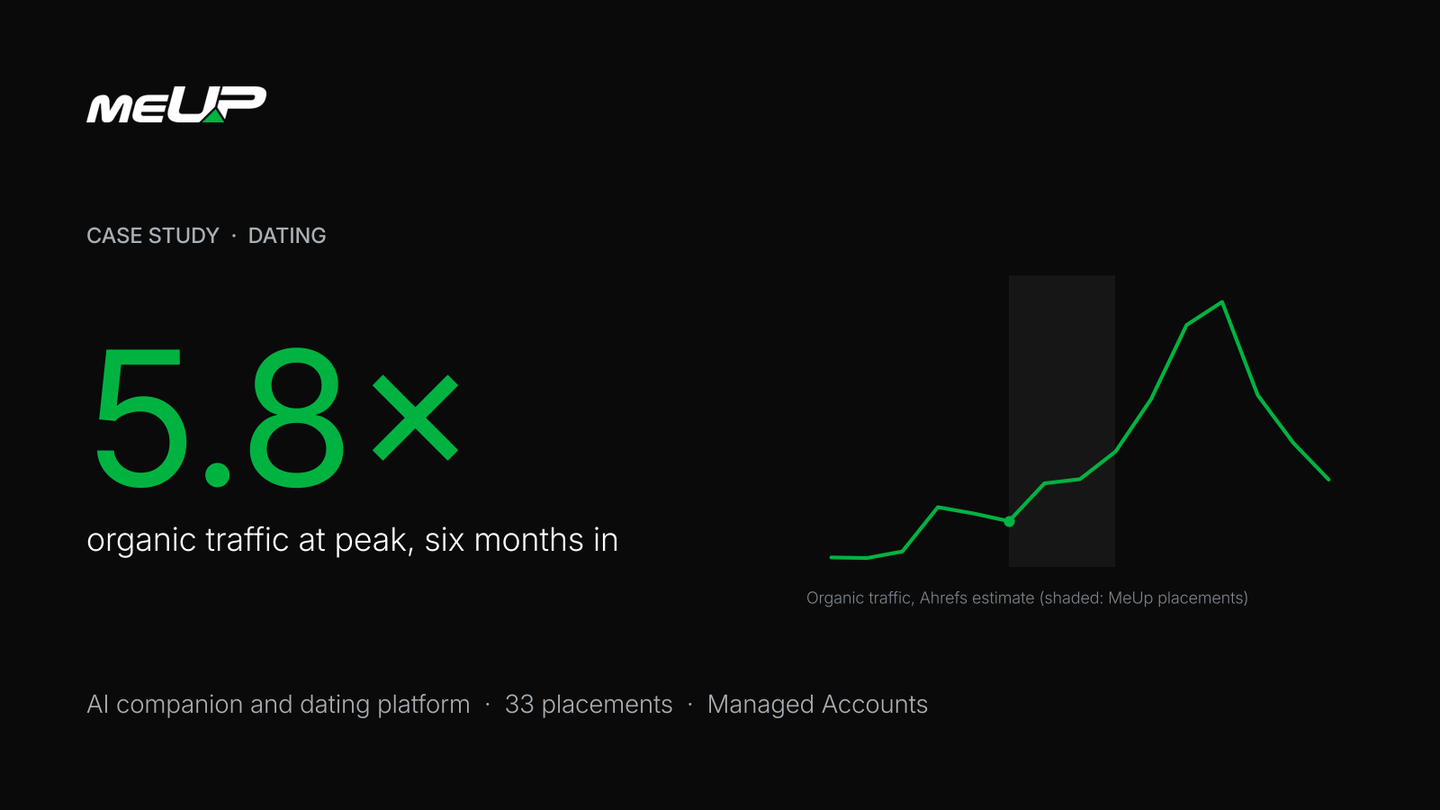
- organic traffic at peak, six months in
- 5.8×
- keywords in Google's top 10
- 3.0×
- Domain Rating points in four months
- +6
Short version: a young AI companion and dating platform had a product people wanted but almost no search visibility, and no one in-house to build links. It handed dating link building to our Managed Accounts team. We placed 33 links between February and May 2026. Organic traffic was 3.7× higher a month later and peaked at 5.8× in August.
Here's how we approached a new domain in a restricted niche. Client and publishers stay anonymous.
The brief
- A young domain with low authority and only a handful of ranking keywords
- A niche where most mainstream publishers won't take dating or adult-adjacent content
- No internal capacity to vet publishers, brief writers or manage placements
How we ran it
1. Publishers whose readers are the audience
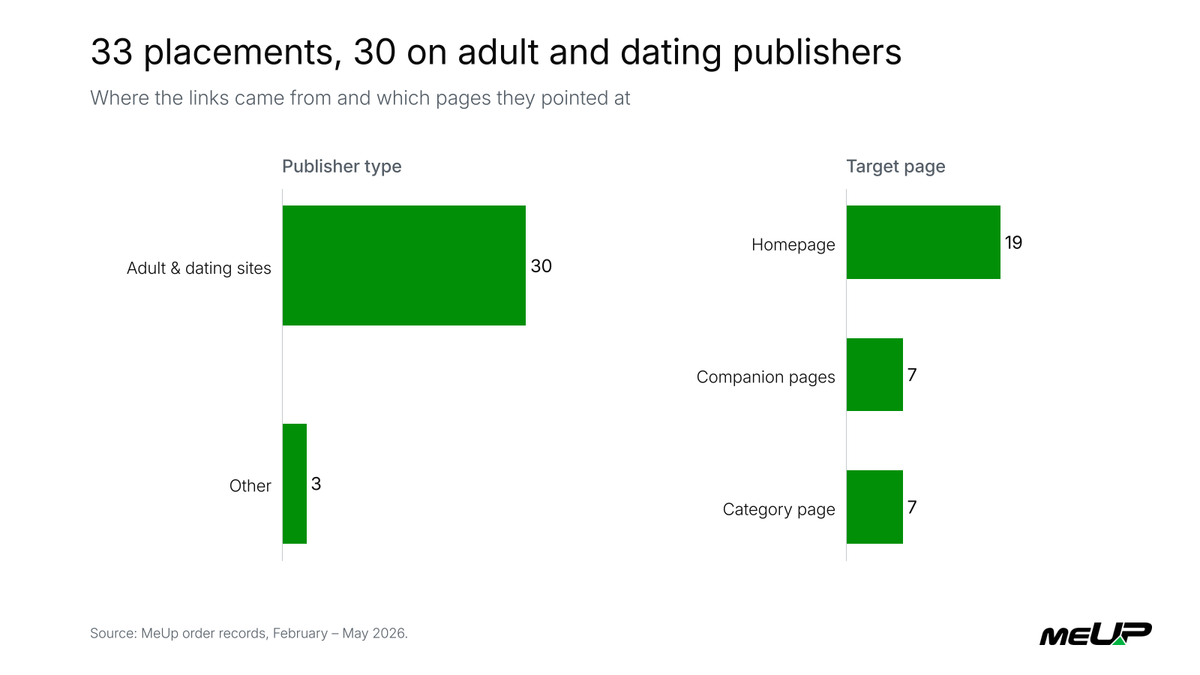
30 of the 33 placements were on adult and dating publishers. For a platform like this, those are the only sites where a link is both relevant and editorially natural. They also carry real audiences: 23 of the 33 had over 10,000 organic visits a month. Average publisher DR was 40.
2. Homepage first
19 of 33 links, 58%, went to the homepage. A young domain needs base authority before inner pages can rank, and the homepage is where that authority is most useful at the start. The other 14 went to the main companion pages and a key category page.
3. Culture-led content
We wrote 24 of the articles and the publishers' editors wrote 8, in each site's own voice. Most were about the bigger picture: how AI companions are changing online relationships, digital intimacy, whether AI can replace human connection, what makes AI companions feel real, and how people use AI chat. A few were product-led guides to the platform's features.
Why: adult and dating audiences read trend and culture pieces, so editors accept them, and a link to the platform fits naturally into that story.
4. Mostly descriptive anchors
About 18% of anchors were branded or naked URLs. The rest described the product in natural language.
5. Two bursts
11 placements in February, a few in March, 15 in April and 5 in May. For a small domain, a concentrated push followed by a pause makes it easy to see what worked.
Results
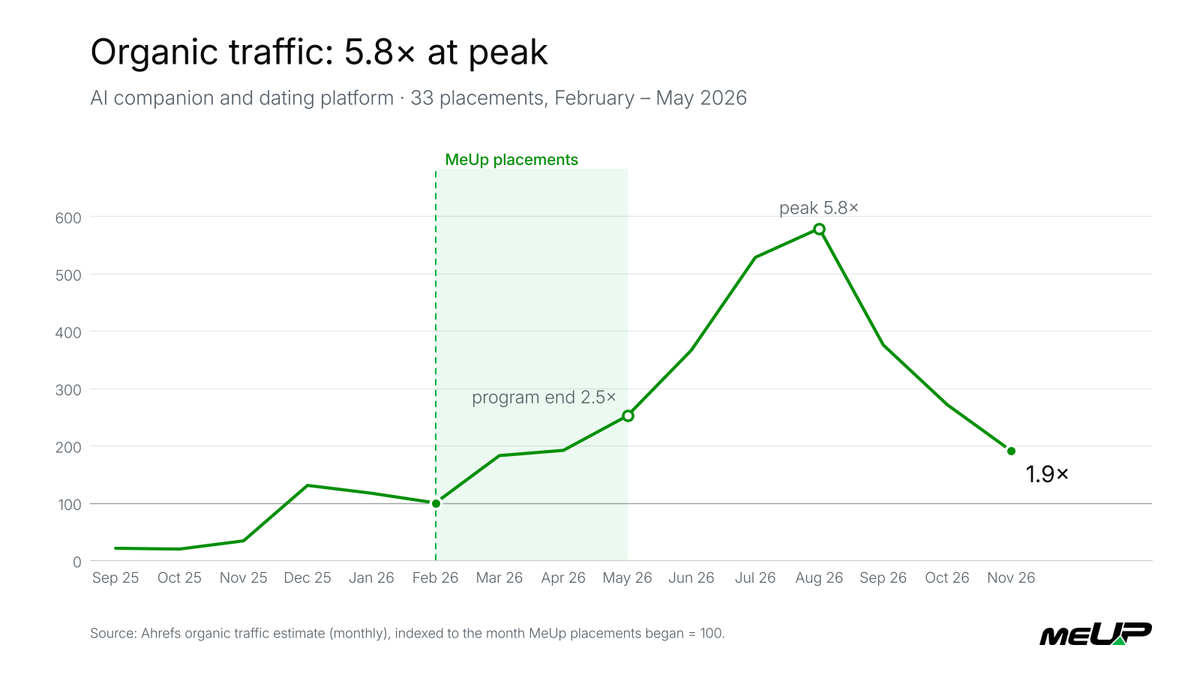
- Organic traffic reached 3.7× the starting level one month after the last placement, and peaked at 5.8× in August 2026.
- Keywords in Google's top 10 tripled by the peak.
- Domain Rating rose 6 points in four months.
- The homepage, which got most of the links, went from almost no visibility to thousands of visits a month. Some of that is brand search growing as the product became better known.
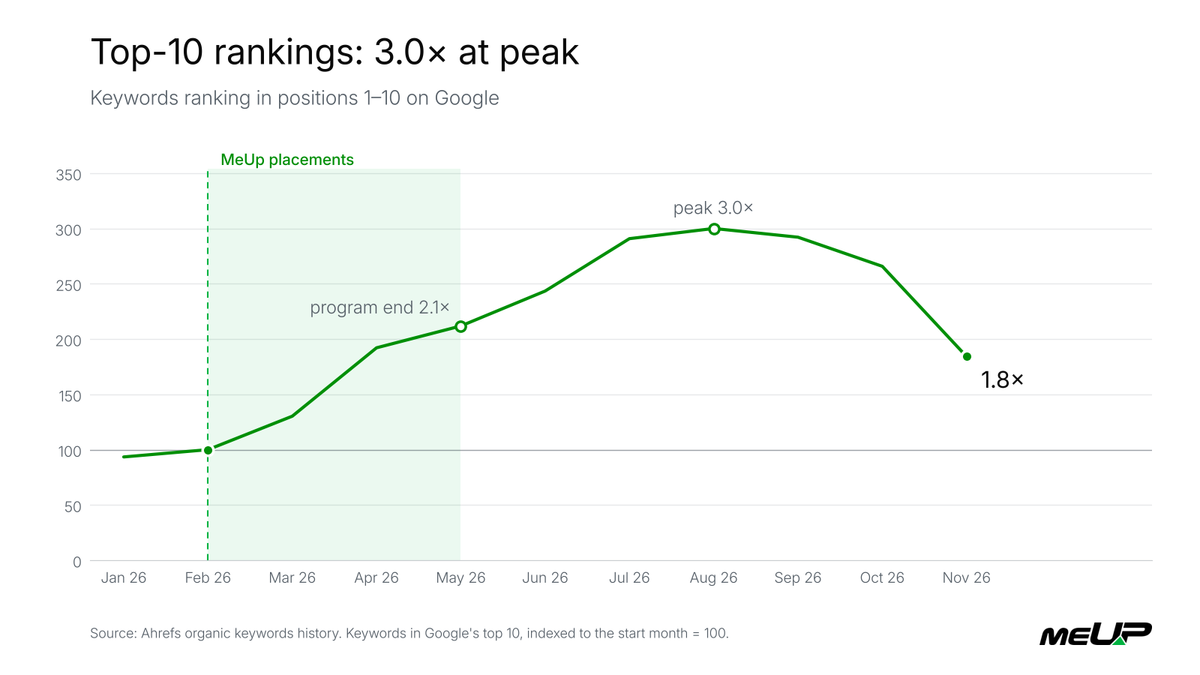
With no new placements since May, traffic has eased back from the peak and sits at 1.9× the starting level at the time of writing. For a young domain, the next phase would be moving links from the homepage to the inner pages.
Why we think it worked
- Audience-matched publishers. Nearly every link came from a site whose readers are the platform's users.
- Base authority first. Homepage links gave a young domain something to build on.
- Clean attribution. The platform's referring domains stayed almost flat apart from these placements during the campaign, so the growth tracks the work closely.
See also our earlier reverse parasite SEO case study for a dating site.
Run it yourself or hand it over
This campaign ran on our Managed Accounts: our team planned it, wrote the content, picked the publishers and placed every link. From $3,000 a month, with 0% service fees. If you'd rather drive it yourself, the same inventory is open on our Self-Serve Marketplace with no minimums.
Same publishers. Same monitoring. Same replacement guarantees. Same team behind it. The only question is how much of the execution you want to own.
See Managed Accounts, the Self-Serve Marketplace, or browse publishers on our dating backlinks page.
How we measured this: organic traffic, keyword and Domain Rating figures are Ahrefs estimates, read monthly and indexed to the month the first MeUp placement went live. Placement counts, publisher Domain Ratings and dates come from MeUp's order records. Client names and domains are withheld; growth figures are rounded.
Common questions
Can you build backlinks for a dating website?
How many backlinks does a new dating site need?
Should a new site's backlinks point to the homepage?

Velichko Achev
CEO, MeUp
Founder and CEO of MeUp. Velichko leads MeUp’s strategy and marketing and writes about link building, SEO metrics and running campaigns in competitive niches.
Build links with MeUp
Related reading
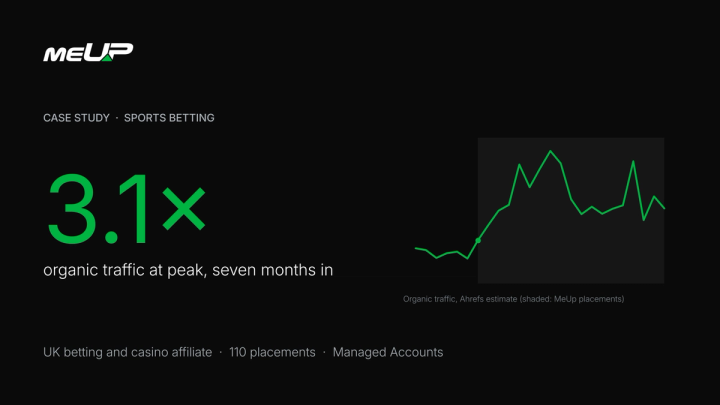
Case Study
Betting Affiliate Link Building Case Study: 3.1× Organic Traffic With Managed Accounts
110 placements we wrote and placed for an agency's betting affiliate client: payment pages, event-led content, sports publishers. Traffic peaked at 3.1×.
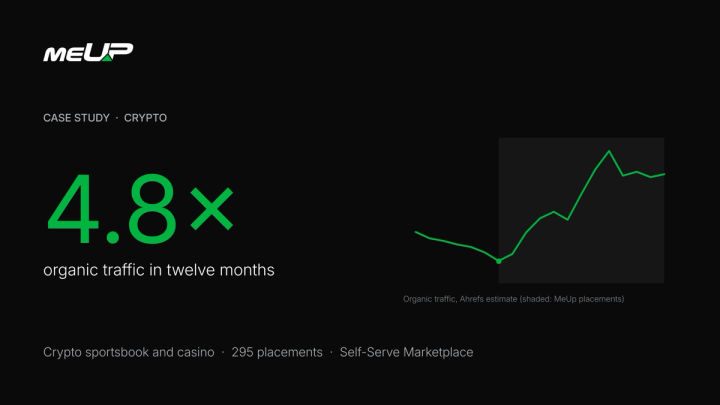
Case Study
Crypto Link Building Case Study: 4.8× Organic Traffic From 295 Placements in 7 Languages
295 placements in 7 languages, product-section targeting and a steady ramp. How a crypto sportsbook grew organic traffic 4.8× in 12 months. Ahrefs data.
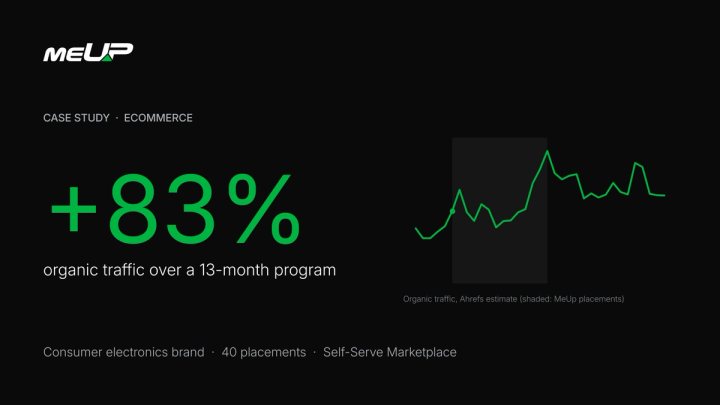
Case Study
Ecommerce Link Building Case Study: +83% Organic Traffic With Lifestyle-First Guest Posts
40 lifestyle-first guest posts, every link to a category page, no branded anchors. How a consumer electronics store grew organic traffic 83%. Ahrefs data.