
Case Studies
Ecommerce Link Building Case Study: +83% Organic Traffic With Lifestyle-First Guest Posts
By Velichko AchevPublished 3 min read
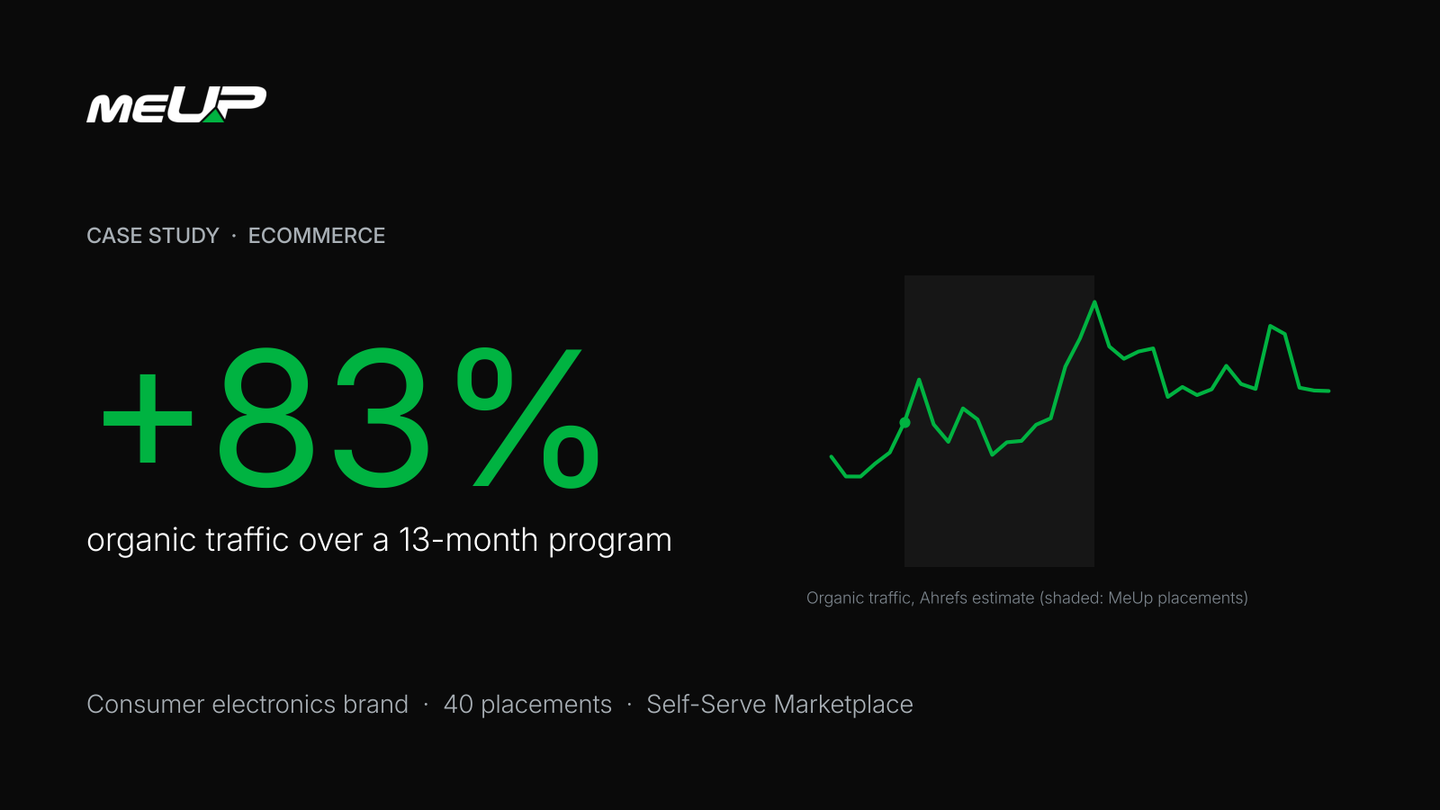
- organic traffic over 13 months
- +83%
- traffic to the most-linked category page
- 3×
- keywords in Google's top 10
- +31%
Short version: a well-known consumer electronics brand used MeUp's Self-Serve Marketplace to run an ecommerce link building campaign for its US store between June 2024 and July 2025. 40 lifestyle-first guest posts, every link to a category page. Organic traffic grew 83% over the program and the most-linked category page tripled.
Big brands don't need homepage links. Here's how this one used guest posts to push category pages instead. Client and publishers stay anonymous.
The situation
A strong brand domain doesn't guarantee category rankings. Category pages compete with big retailers and marketplaces, and online stores rarely earn links to them naturally: people link to the brand or to a product review, not to a category.
The playbook
1. Category pages only
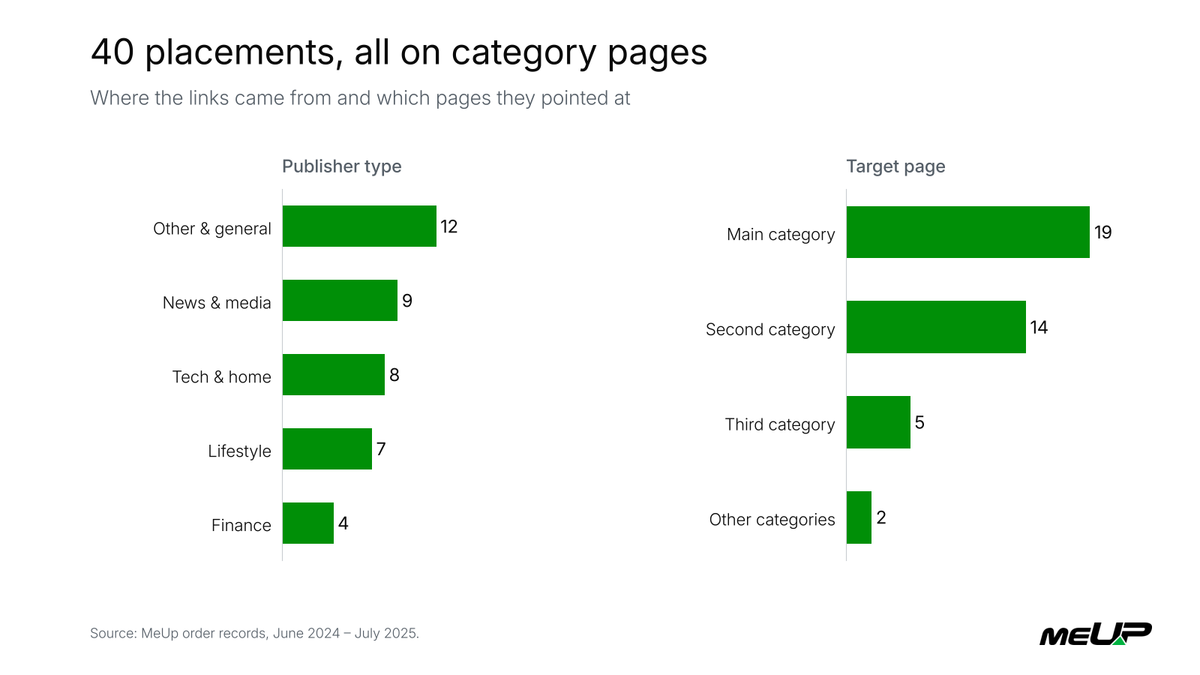
All 40 links went to category and collection pages: 19 to the main product category, 14 to a second category, 5 to a third and 2 to other categories. None went to the homepage, which already had all the brand authority it needed.
2. No branded anchors
Every anchor was a descriptive category phrase. For a brand this well known, brand anchors add nothing; descriptive anchors tell Google which category page should rank for which product term.
3. Lifestyle-first content
The brand wrote 39 of the 40 articles itself (one was written by the publisher), at around 740 words each. None of them were about the product. They were about situations where the product is the natural answer: working remotely or from the road, travel and national-park trips, off-grid weekends, making a home more energy efficient, keeping a small business running during an outage, cutting utility costs and smart-home setups.
Why: general and lifestyle editors publish useful how-to pieces, not product pitches. The product mention, and the link, sits naturally inside the advice.
4. Broad, general publishers
Placements went to news, tech, home, lifestyle and personal finance sites, matching the broad audience for the product. Authority was strong: 23 of 40 placements on DR 50+ sites, 11 of them at DR 70+.
5. In waves
Placements went out in bursts: 9 in August 2024, 8 in November and 6 in April 2025, with lighter months in between.
The same account also ran a further 39 placements for the brand's other regional stores.
Results
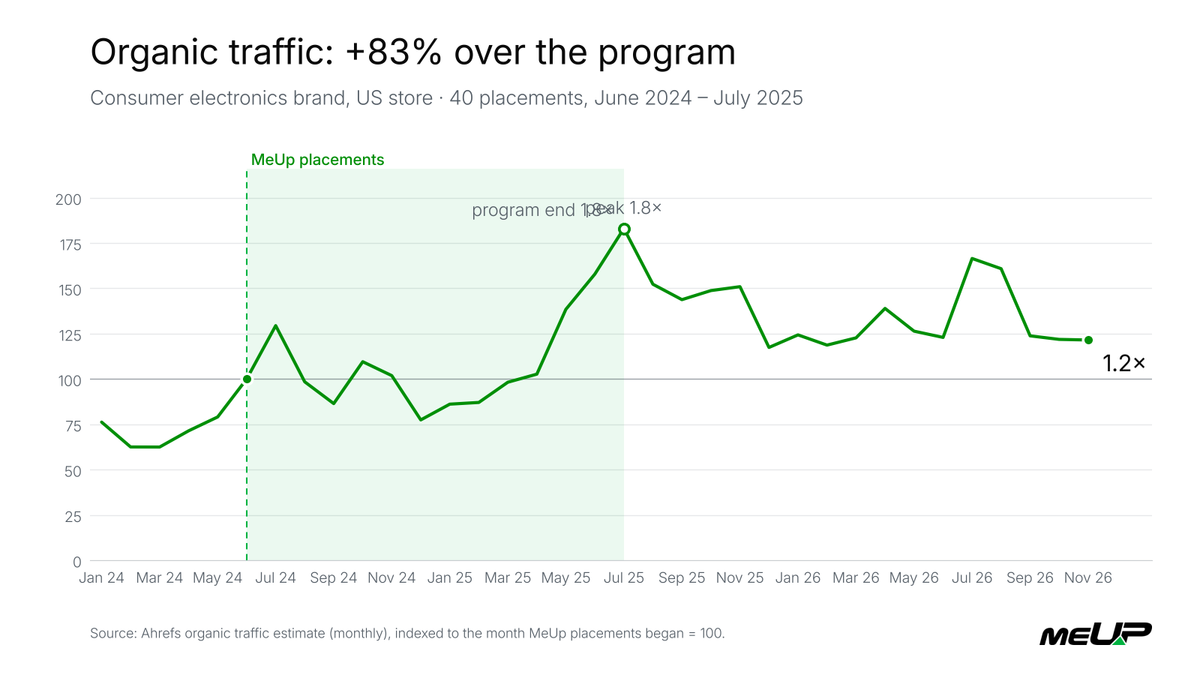
Organic traffic to the US store grew 83% over the 13-month program. Keywords in Google's top 10 grew 31% and top-3 keywords 19%. Domain Rating went from 75 to 77.
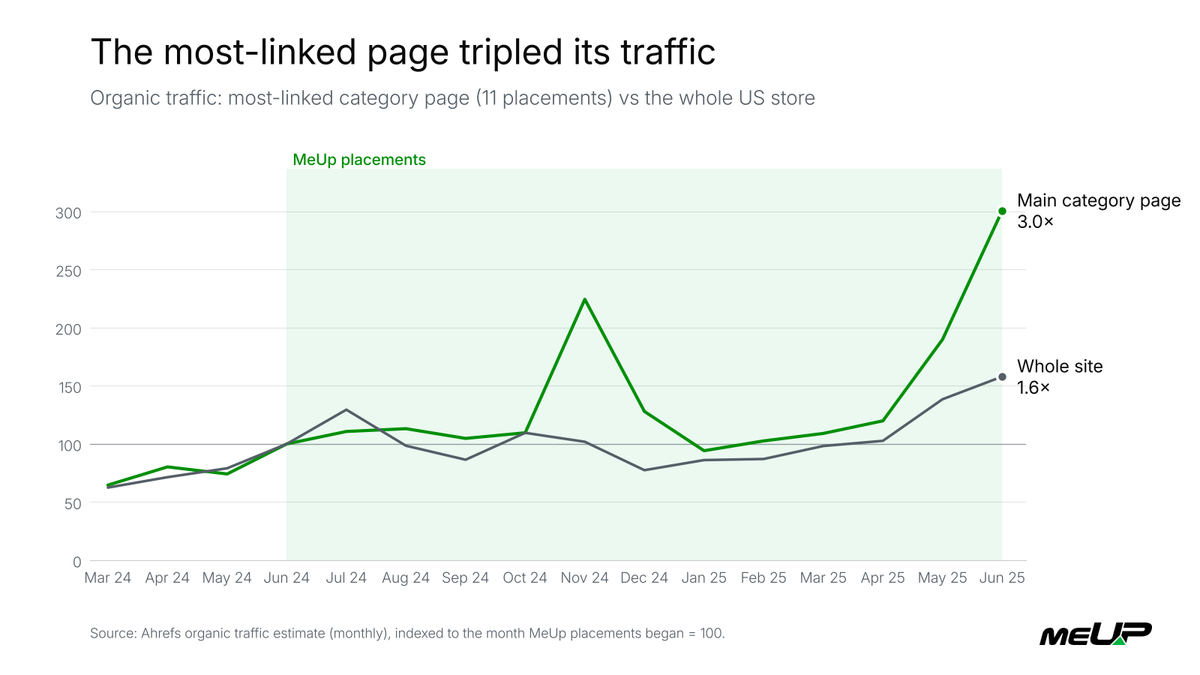
- Main category page: the most-linked page went from about 2,500 to 7,500 monthly visits (3×).
- Other linked category pages: grew roughly 2.5 to 4× over the same period.
- After the program ended, store traffic settled at about 22% above the starting level.
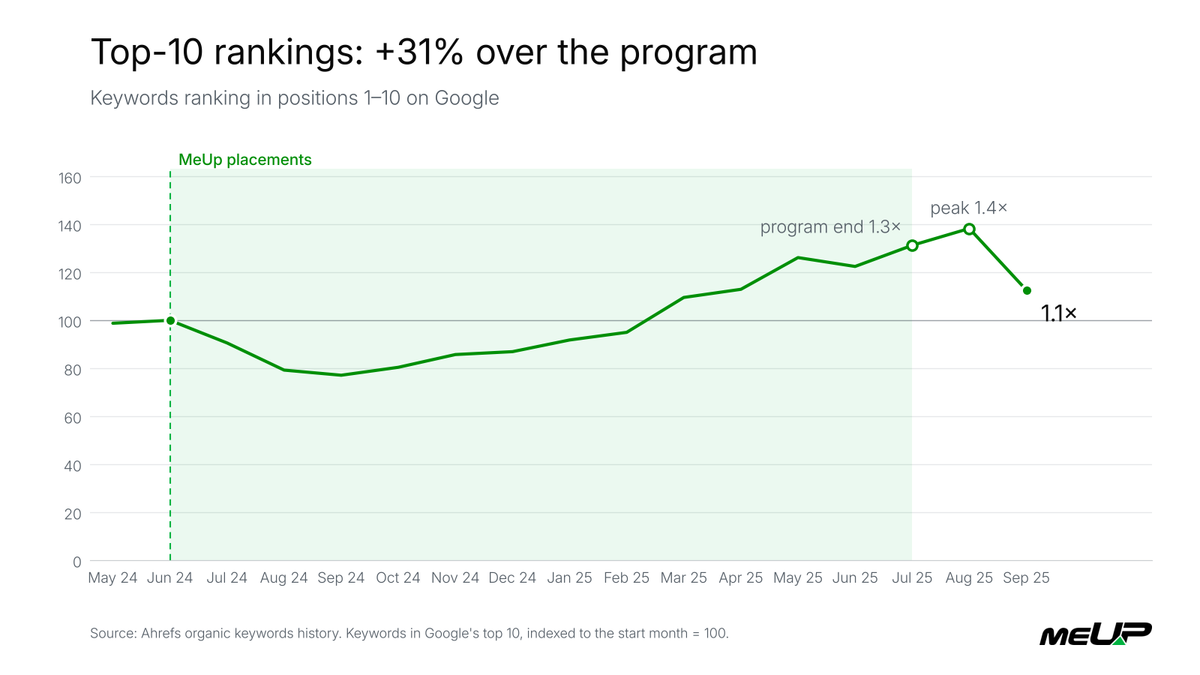
What this shows
For a brand of this size, MeUp placements were one input among several, so the store-level growth reflects the brand's full SEO effort. The page-level picture is the useful part: the category pages that got the links are the ones that grew fastest.
Why we think it worked
- Category focus. Links went where non-brand buying searches land.
- Descriptive anchors. Each link told Google which category it was about.
- Content that earns its place. Lifestyle advice gave every link a natural reason to exist on a general site.
More in our guide to link building for e-commerce, or see a smaller store's approach in our CBD link building case study.
Want this done for you?
This client ran everything on our Self-Serve Marketplace: writing 39 articles, choosing publishers and placing every link. If you'd rather spend that time elsewhere, our Managed Accounts team runs the same playbook for you: strategy, publisher selection, content, placement and monitoring. From $3,000 a month, with 0% service fees.
Same publishers. Same monitoring. Same replacement guarantees. Same team behind it. The only question is how much of the execution you want to own.
See Managed Accounts, read our Self-Serve vs. Managed guide, or browse publishers yourself on our ecommerce backlinks page.
How we measured this: organic traffic, keyword and Domain Rating figures are Ahrefs estimates, read monthly and indexed to the month the first MeUp placement went live. Placement counts, publisher Domain Ratings and dates come from MeUp's order records. Client names and domains are withheld; growth figures are rounded.
Common questions
Should ecommerce backlinks point to category pages?
What content works for ecommerce guest posts?
Should a big brand use branded anchors?

Velichko Achev
CEO, MeUp
Founder and CEO of MeUp. Velichko leads MeUp’s strategy and marketing and writes about link building, SEO metrics and running campaigns in competitive niches.
Build links with MeUp
Related reading
Case Study
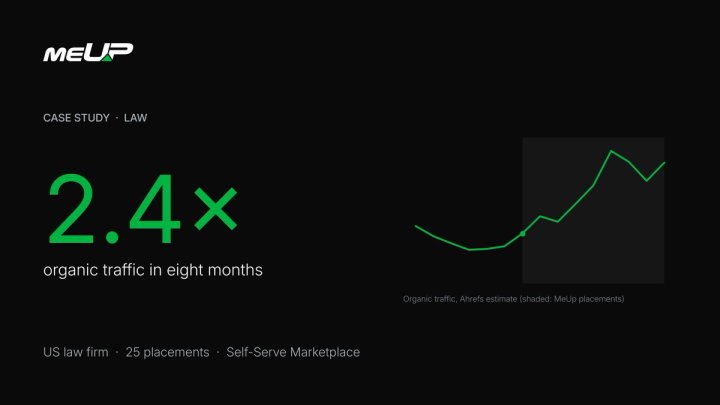
Law Firm Link Building Case Study: 2.4× Organic Traffic With Local, Long-Form Guest Posts
25 long-form legal guest posts aimed at county-level service pages. How an agency helped a US criminal defense firm grow organic traffic 2.4× in 8 months.
Case Study
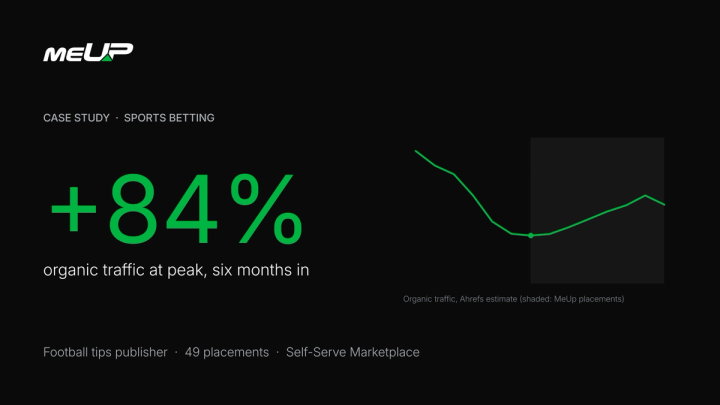
Sports Betting Link Building Case Study: How 49 Guest Posts Turned a −64% Slide Into +84%
49 guest posts, one article per betting market, timed to the football calendar. How a tips site went from −64% to +84% organic traffic. Ahrefs data.
Case Study
iGaming Link Building Case Study: 0 to 88K Clicks With 12 Spanish Guest Posts
iGaming link building case study: how 12 guest posts on Spanish sites took a casino site on an aged domain from zero traffic to 88K organic clicks.